Real screens from the shipped product
Erden Davetiye sells something people only buy once and cannot afford to get wrong. The work was two halves of the same system: a storefront that lets a couple choose with confidence, and the admin behind it that lets the atelier actually run on it — orders, designs, products, categories, coupons, customers, reviews and analytics.
- Role
- Product, design and engineering
- System
- Catalogue, orders, admin
- Platform
- Web, mobile first
- Status
- Live
- Scope
- Storefront and admin
- Built by
- One person
A storefront is the half you see. The other half is what keeps the atelier running.


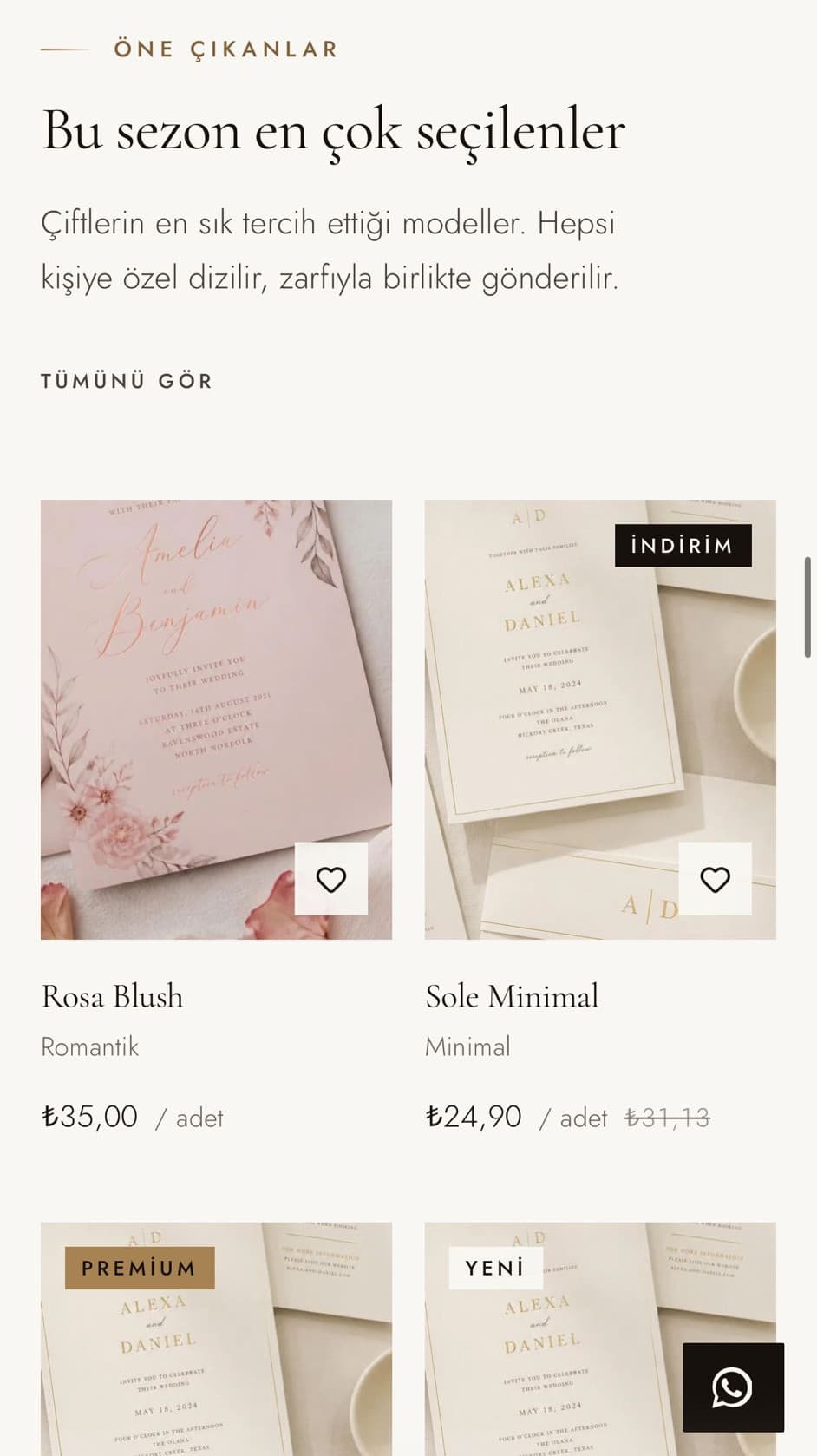
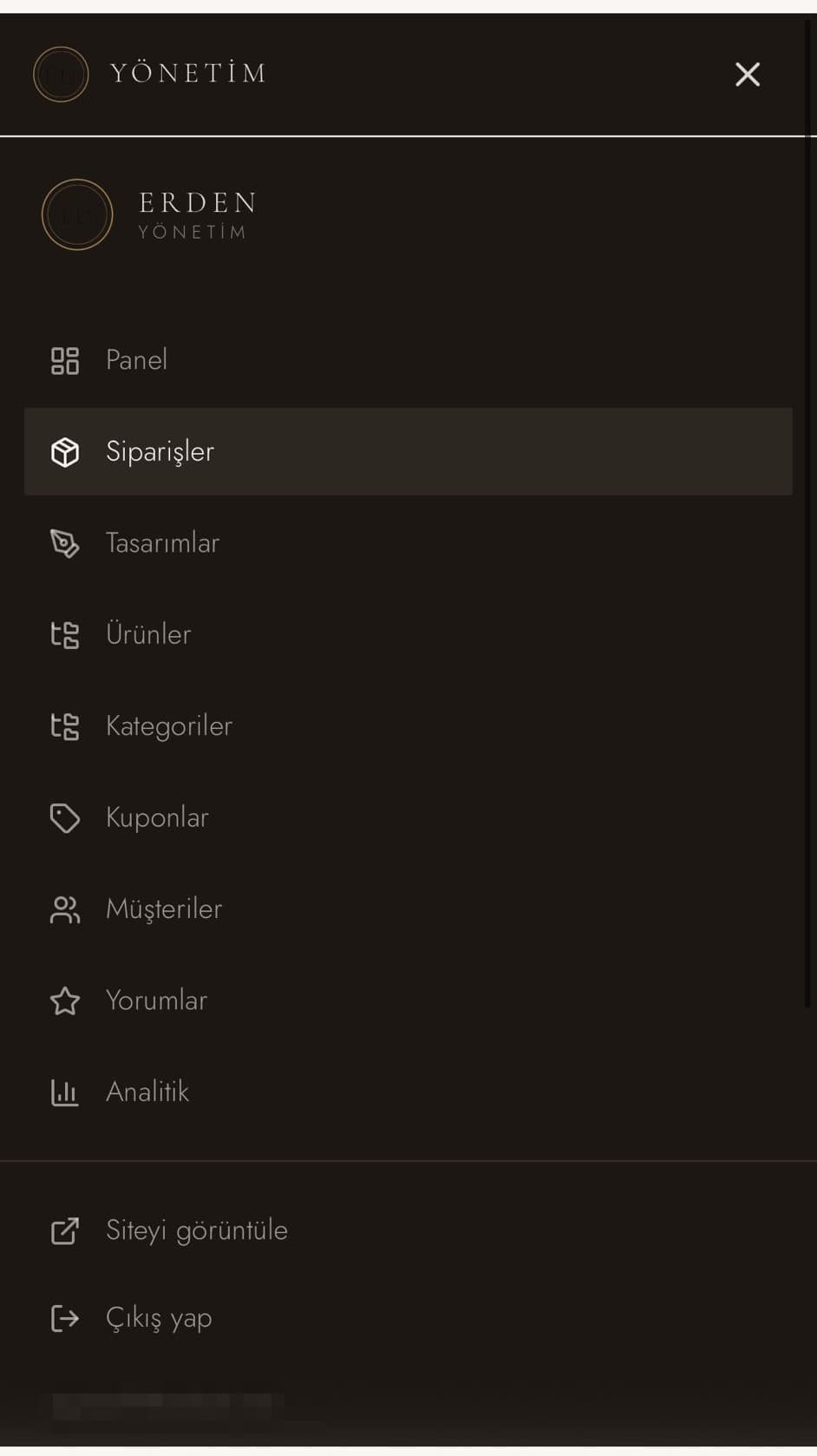
- 01Dashboard
- 02Orders
- 03Design requests
- 04Products
- 05Categories
- 06Coupons
- 07Customers
- 08Reviews
- 09Analytics
Nine areas, all of them in the capture on this page and all of them operated by the atelier rather than by a developer. This is the half of a commerce project that decides whether it became software or stayed a website.
What is actually being sold
Invitations are chosen once, for a day nobody wants to get wrong, and they are chosen on feeling as much as on specification. A grid of thumbnails and a price does not carry that — it strips out exactly the qualities the purchase is being made on.
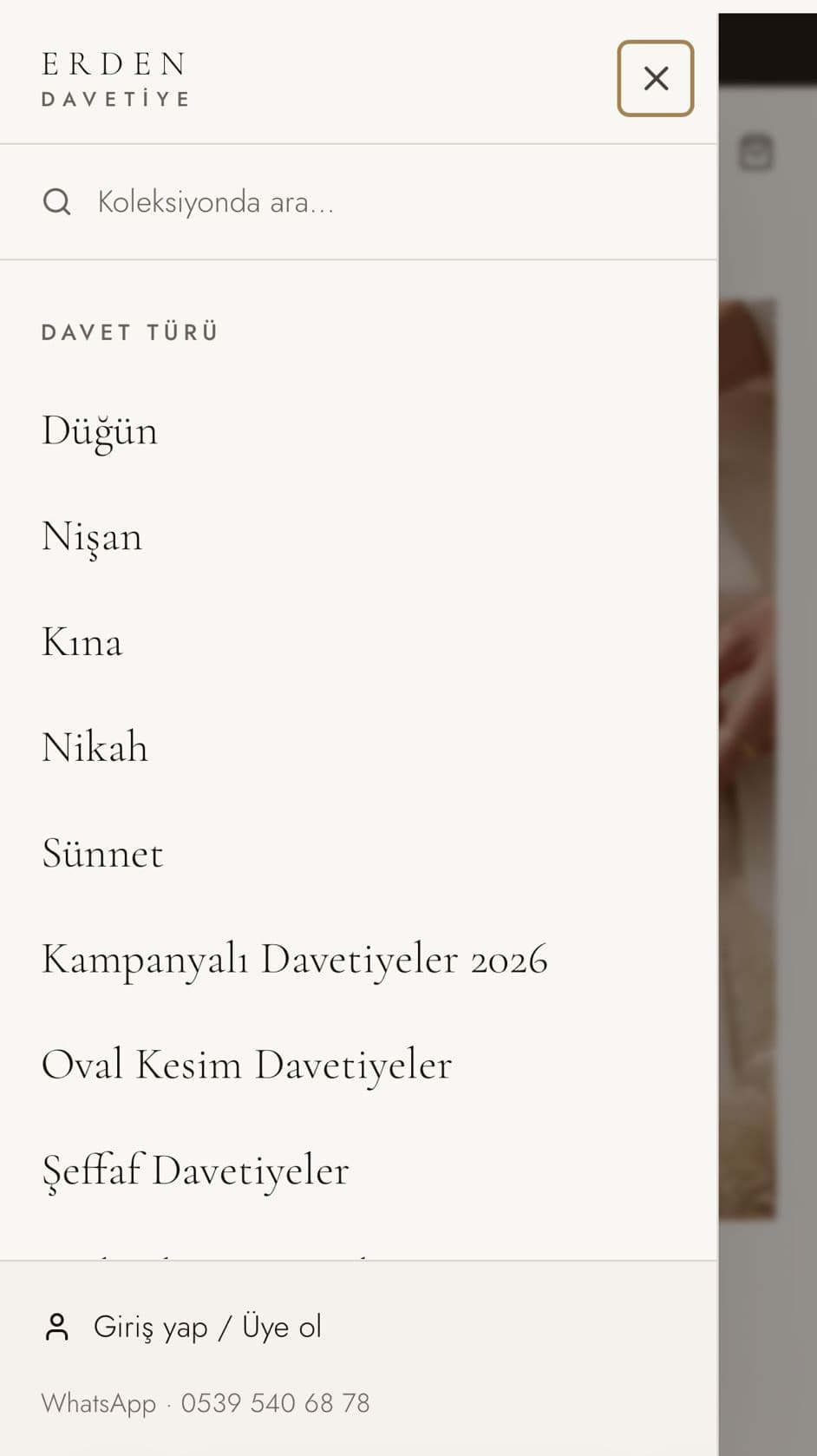
So the storefront is built to be browsed the way the atelier is walked: by occasion first, then by style, with the photography given enough room to show what the paper actually looks like.

The catalogue
Wedding, engagement, henna, nikah, circumcision — the collection is cut by occasion, then again by style, then again by seasonal and shape-based collections. Prices are per unit, campaign and new-arrival states are visible on the card, and anything can be saved for later.
All of it is managed by the atelier rather than by a developer. Products, categories, campaign collections and coupons are theirs to change.

A person, not a bot
The one thing an online storefront takes away from an atelier is the person across the table. So the site puts them back explicitly: a designer from the workshop, reachable on WhatsApp, with the hours printed next to the button.
It is a deliberately unfashionable decision. No chat widget, no assistant, no promise of an instant answer — just the shop's actual phone, which is what the customer wanted anyway.
The half you do not see
Behind the storefront is the system the atelier runs on: orders, design requests, products, categories, coupons, customers, reviews and analytics — each its own area, all in one place.
This is the part that decides whether a commerce project is a website or a business tool. A storefront nobody can operate quietly becomes the developer's job forever; this one does not.
Two goals, stated by the atelier: sell more, and let a couple choose and design their invitation without the anxiety that usually comes with buying something once.
It is live at erdendavetiye.com. No figures are published here, because none have been verified — and an unverified number would say less than the working system does.
Tell me what you are trying to build and what is making it hard. If there is a fit I will say so quickly; if there is not, I will say that too.
- A reply
- Usually within two working days, from me.
- A conversation
- Scope, constraints, budget, timing. No pitch deck.
- A straight answer
- Including when I am the wrong person for it.